
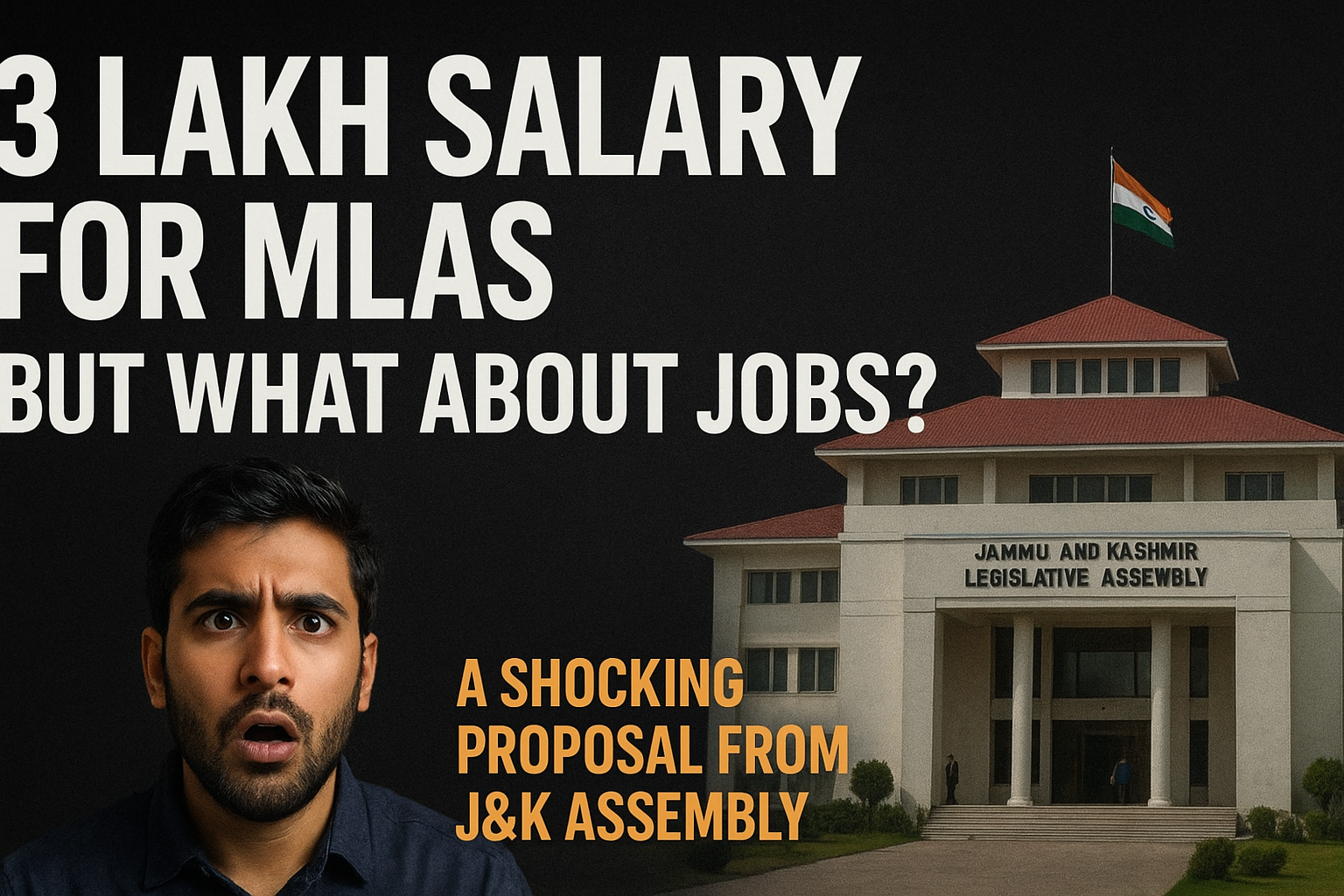
A legislative committee in Jammu and Kashmir has recommended doubling the monthly salary of MLAs from ₹1.5 lakh to ₹3 lakh along with a steep increase in housing and car advances, and even a hike in pensions for former legislators. The proposed changes, if approved, will take effect retrospectively from November 2024.
The committee justifies its move by arguing that legislators struggle to meet “growing expenses associated with public duties.” Yet this reasoning feels disconnected from the economic and social realities of the region. At a time when unemployment remains high, infrastructure weak, and essential public services unreliable, such a proposal appears tone-deaf and self-serving.
Public representatives are expected to serve not to insulate themselves from the hardships their constituents face. A housing loan of ₹75 lakh and a car advance of ₹25 lakh may seem minor compared to corporate pay scales, but for an average citizen, these figures are unimaginable. When the public is tightening its belt, it’s hard to justify why legislators should loosen theirs.
Even more troubling is the recommendation to make these benefits retrospective effectively rewarding lawmakers for past months without any link to performance, attendance, or legislative productivity. The Assembly, which has seen limited sittings in recent years, is now being asked to approve a backdated pay rise for itself. It’s a move that undermines the principle of accountability in public office.
To be clear, legislators deserve fair compensation. Public service should not mean financial hardship. But fairness requires transparency and justification not unilateral decisions made behind closed doors by those who stand to benefit. Before any hike is approved, the government owes the public a clear explanation of the fiscal implications, benchmarks for performance, and comparisons with other states.
In a democracy, credibility is built not by how much lawmakers earn, but by how responsibly they use the trust and taxes of the people.
A pay hike without accountability risks eroding both.